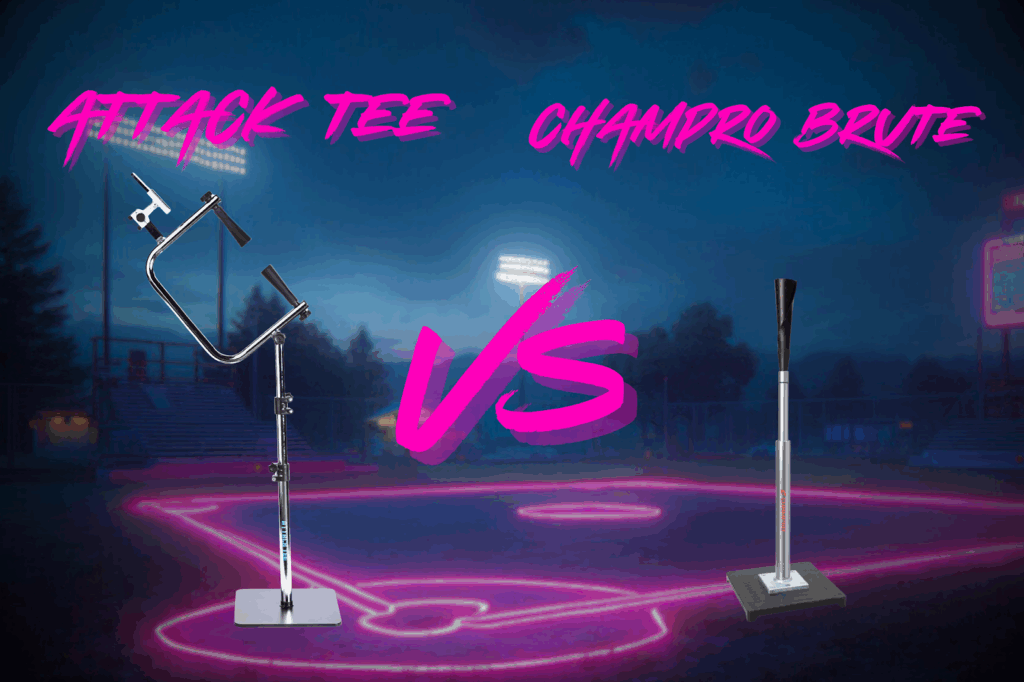
With 18 years operating an elite baseball training facility and having evaluated virtually every batting tee on the market while coaching over 5,000 young hitters, I’ve learned that equipment decisions directly impact player trajectory. Today’s analysis examines whether the widely-used Champro Brute 2 can compete with that hot new incomer called the Attack Tee.
Why This Comparison Changes Everything for Serious Players
The Champro Brute 2 is well-known nationwide, marketed as “professional-grade” with its 8-pound base and two-year warranty. But marketing claims and performance realities often diverge dramatically.
Having tested both tees through thousands of facility sessions, I’ve documented how misconceptions about the Champro’s supposed durability advantage may cost baseball and softball families unnecessarily—both financially and developmentally.
Let’s separate marketing from positive and repeatable swing mechanics and performance outcomes.
Head-to-Head Technical Specifications: The Numbers That Matter
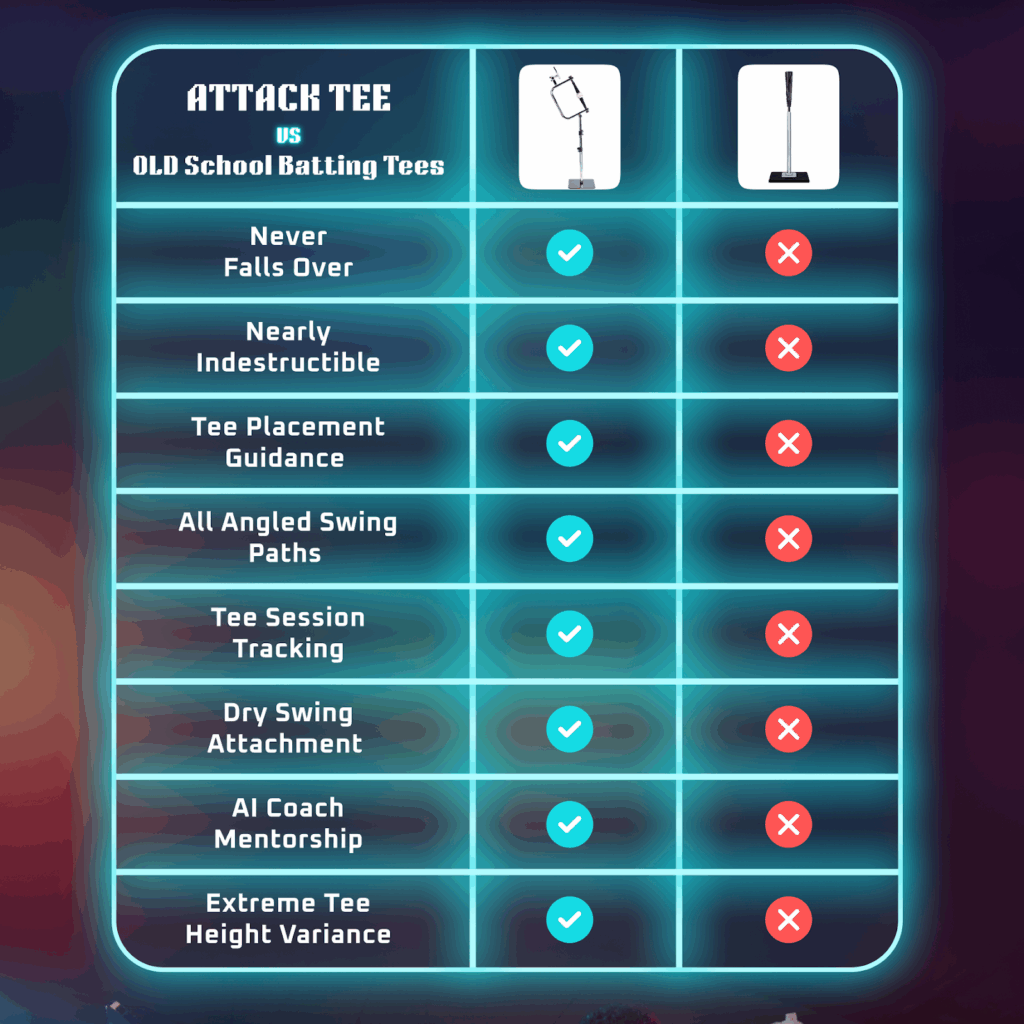
| Performance Metric | Attack Tee | Champro Brute 2 |
| Market Price | $237.97 | $53.95-$99.99 (depending where online) |
| Total Weight | 17.2 lbs (iron base) | 10.75 lbs (8 lb rubber base) |
| Height Range | 19″-49″ | 23″-43″ |
| Base Dimensions | Low-profile iron | 10″×10″ rubber square |
| Angle Adjustment | Infinite variability | Fixed perpendicular |
| Technology Integration | iOS app with MLB data | None |
| Warranty Period | 365-day money-back | 2-year limited |
| Replacement Parts Cost | None needed | Rubber top ($20-30, depending where online) |
Breaking Down Performance Categories: Reality vs Marketing Claims
1. Stability Analysis: When Physics Defeats Marketing
The Weight Distribution Truth
Despite claims about the Champro Brute 2’s “heavy-duty” construction, basic physics reveals critical flaws:
Attack Tee (17.2 lbs iron base):
- Its mass exceeds elite youth swing force by 400%+
- Iron density creates unshakeable ground contact
- Zero documented tipping incidents in heavy facility testing
- No supplemental weighting (dumbbells, sandbags, weight plates) ever required
Champro Brute 2 (8 lb rubber base):
- Weight barely exceeds aggressive youth swings
- Regular tipping with power hitters ages 12+
- Users frequently add weight plates or sandbags
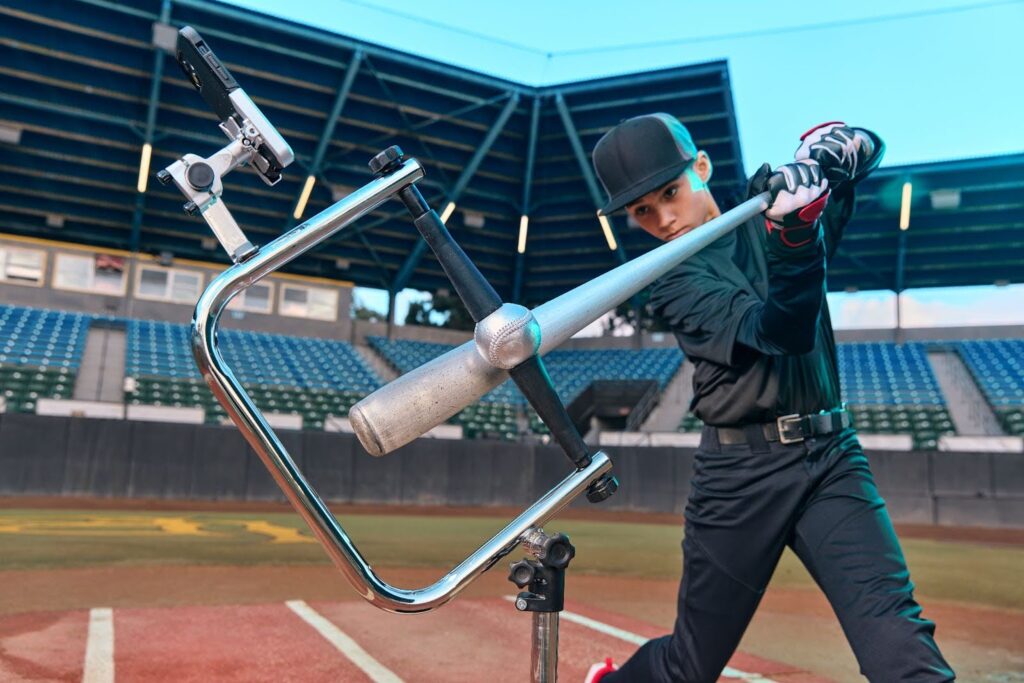
Reality Check: I’ve personally witnessed youth travel players knock over Champro Brute 2 tees during their weekly training sessions. The rubber feet help marginally for sure, but 8 pounds simply cannot counteract the rotational forces generated by developing power hitters.Verdict: The Attack Tee’s 17.2-pound iron foundation provides genuine never-tip stability, while the Champro’s 8-pound rubber base requires constant adjustments and supplemental weighting.
2. Height Range: The Development Window Problem
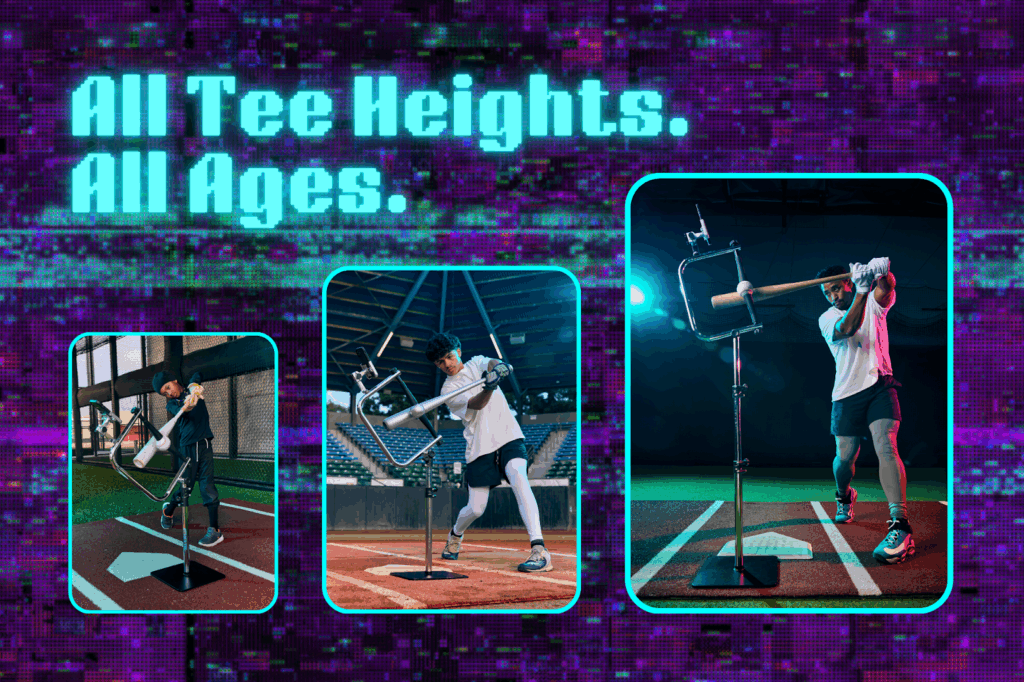
Attack Tee’s Complete Coverage (19″-49″): The 30-inch total range accommodates every player from first tee-ball experiences through college preparation:
- Ages 5-7: 19″-25″ for initial contact development
- Ages 8-11: 24″-35″ for strike zone mastery
- Ages 12-15: 32″-44″ for power development
- Ages 16+: 38″-49″ for elite training
Champro Brute 2’s Limited Window (23″-43″): The 20-inch range creates gaps at crucial development stages:
- Too high for young beginners (23″ minimum challenges 5-7 year olds)
- Insufficient tee height for high school/college or slow-pitch softball players (43″ maximum misses high strikes)
- Forces equipment replacement as players grow
Facility Reality: We used to regularly place Champro tees on elevated platforms (usually buckets or chairs) for older players working high strikes. Such a modification shouldn’t be necessary with “professional-grade” equipment.
Verdict: Attack Tee eliminates age-based replacement cycles, while Champro’s height range forces multiple equipment purchases throughout youth careers.
3. Swing Plane Technology: The Great Divide Between Yesterday and Tomorrow
Attack Tee’s Variable Angle Revolution
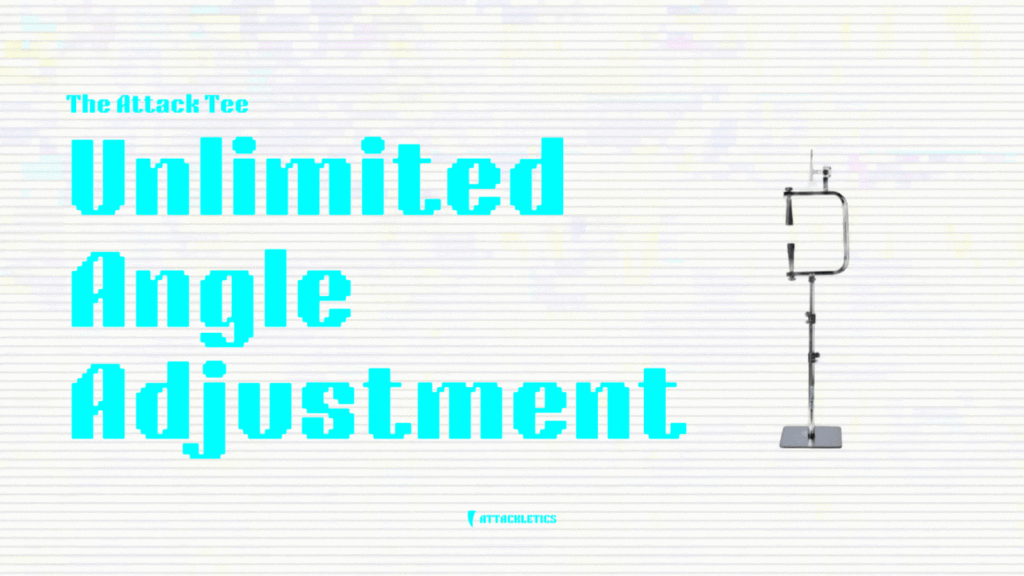
The Attack Tee fundamentally reimagines batting practice through unlimited swing plane adjustability—a breakthrough that transforms repetitive swings into precision skill development.
Current MLB bat tracking data reveals critical attack angle variations across strike zones:
- High fastball territory: 6-9 degree upward trajectory optimal
- Middle zone contact: 8-11 degree barrel path maximizes exit velocity
- Low pitch region: 13-25 degree launch angle drives production
The Attack Tee’s proprietary angle adjustment mechanism, paired with its complimentary iOS guidance system, converts this elite-level biomechanical data into accessible youth development tools.
Players unconsciously develop zone-specific barrel control simply through guided repetition.
Champro Brute 2’s Single-Dimension Reality
The Champro’s traditional fixed-perpendicular design represents batting tee technology frozen since the 1950s. This static approach forces players into:
- Mechanical guesswork: No guidance for height-appropriate swing adjustments
- Pitch location blindness: Inside and outside pitch mechanics remain undifferentiated
- Repetitive limitation: Single angle creates robotic patterns versus adaptive skills
- Development ceiling: Motor learning research proves variable practice superior to blocked
Coaching Reality: I’ve tracked hundreds of players transitioning from fixed to adjustable tees—the mechanical improvements emerge within days, not months.
Performance Impact: Attack Tee builds game-ready adaptability through angle variation, while Champro’s fixed position creates “batting tee syndrome”—pretty swings in practice that collapse against the realities of live pitching.
4. Tee Top Engineering: Active Training vs Passive Ball Holding
Attack Tee’s Intelligent Design Architecture
After cycling through dozens of prototype iterations, Attack Tee engineered a ball-holding system that functions as an active training partner:
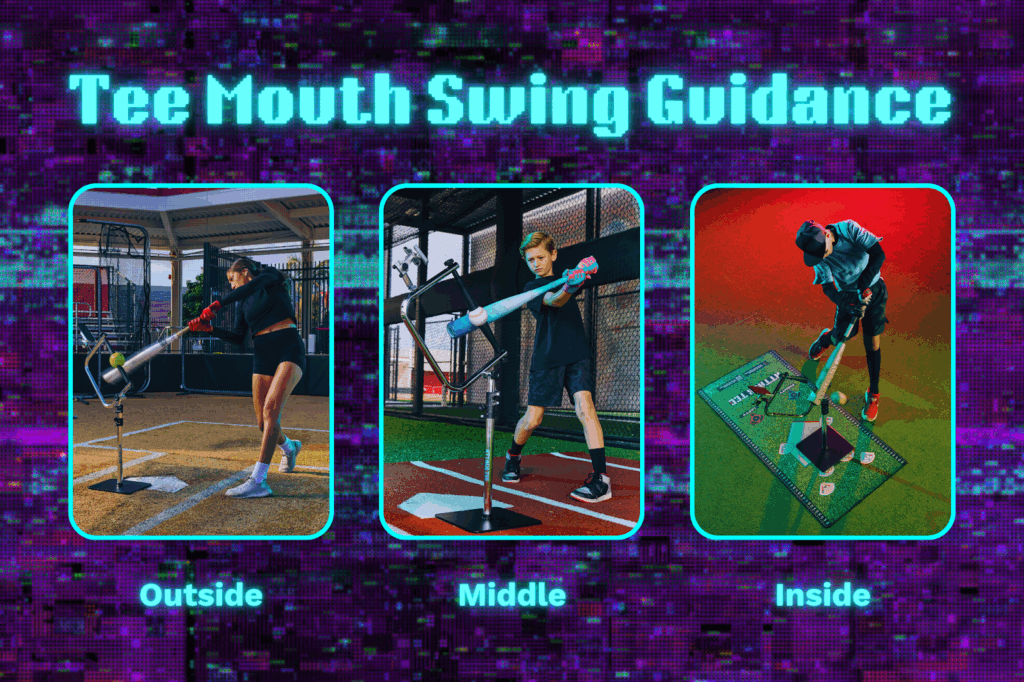
Directional Swing Training: The tee mouth rotates horizontally, creating both visual and physical guides for pulling inside pitches and driving outside pitches opposite field. This simple mechanical feature teaches directional hitting naturally.
Biomechanical Auto-Correction: The angled plane design inherently positions hitters’ bodies correctly—no verbal cues needed. Players unconsciously adjust stance, hand position, and barrel path to match the tee’s plane, developing proper mechanics through equipment interaction alone.
Dry-Swing Innovation: The included attachment converts the tee into a no-ball-needed swing trainer, perfect for indoor work or stations with limited supervision. This bonus feature essentially provides two training tools in one purchase.
Champro Brute 2’s Conventional Cup
The ultra-flexible rubber top, while marketed as reducing swing resistance, remains fundamentally unchanged from designs patented in the 1960s:
- Passive function only: Holds ball without providing mechanical feedback
- No directional capability: Fixed position regardless of intended hit location
- Replacement challenges: Users report inability to source replacement tops when worn
- Missed development opportunity: Equipment that could teach instead merely supports
Training Efficiency: Attack Tee’s design teaches while players swing, while Champro’s passive cup requires external coaching for mechanical development—adding thousands in instruction costs.
5. Technology Platform: Professional Instruction Democratized vs Analog Isolation
Attack Tee’s Digital Coaching Revolution
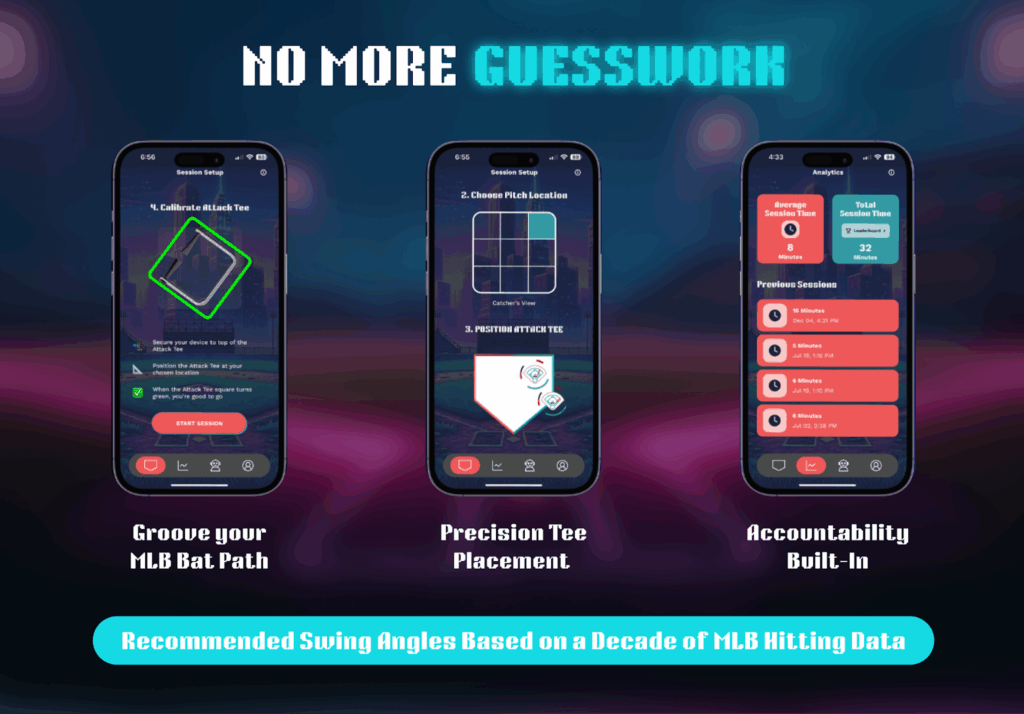
Tee Placement Visual Precision Mapping: Players select their stance (righty/lefty), tap their target zone, and receive instant visual guidance showing exact tee positioning relative to home plate. This eliminates the contact point guesswork that plagues traditional training.
Statcast-Powered Mechanics: Each zone displays scientifically-validated bat path attack angles derived from 10+ years of MLB tracking data. Young hitters access the same biomechanical insights driving professional development programs.
Performance Accountability: Automatic session tracking quantifies practice commitment—critical for building confidence through documented preparation. Players enter games knowing they’ve completed their work.
AI Coaching Access: The optional mental skills and approach coach ($9.99 monthly) provides 24/7 professional guidance. Developed from millions of coaching interactions, it delivers personalized instruction for less than a movie ticket—solving baseball’s accessibility crisis where quality coaching remains geographically and financially restricted.
Champro Brute 2’s Information Vacuum
Without technological integration, Champro users navigate training blind:
- Setup uncertainty: No guidance on proper tee placement or contact points positioning for different zones
- Mechanical mysteries: Zero feedback on appropriate swing paths
- Progress invisibility: No tracking means no objective improvement measurement
- Coaching dependence: Requires expensive external instruction for proper development
Development Gap: The technology differential creates a compound advantage—Attack Tee users receive thousands of micro-coaching moments through app guidance, while Champro users practice without feedback, often reinforcing flaws.
Bottom Line: Attack Tee transforms every swing into a coaching opportunity through technology, while Champro Brute 2 leaves players guessing in analog isolation—a critical disadvantage in modern player development.
The True Cost Analysis: Beyond Sticker Price
Option A: Champro Brute 2 Lifecycle Expenses
- Initial purchase: $54-100
- Rubber top replacements (sometimes unavailable, forcing new tee; otherwise $20-30 per replacement): $54-100
- Second complete tee (year 2): $54-100
- Weight plates/sandbags for stability: $30-50
- Third tee for height limitations: $54-100
- Total 4-year cost: $246-450
Option B: Attack Tee Single Investment
- One-time purchase: $237.97
- 365-day warranty coverage: Included
- Documented replacement needs: Zero
- Total 4-year cost: $237.97
The “budget” option becomes more expensive while delivering inferior performance.
Developmental Impact: The Hidden Performance Tax
Compensation Patterns from Equipment Limitations
Training with the Champro Brute 2’s limitations creates:
- Swing deceleration: Players might slow down to prevent tipping
- False muscle memory: Fixed angles don’t match game swing variability or mechanics
- Frustration cycles: Interruptions from tipping over destroy rhythm
- Confidence erosion: Equipment failures blamed on swing technique
Professional remediation costs:
- Private instruction to fix habits: $60-100 per lesson
- Season-long correction (30 weeks): $1,800-3,000
- Multi-year mechanical overhaul: $7,200-18,000
Practice Efficiency Mathematics
Time lost to Champro Brute 2 instability:
- Resetting tipped tees: 8-10 minutes per hour
- Height adjustment failures (adding a chair or bucket for more height): 3-5 minutes per session
- Adding/adjusting weights: 5 minutes setup time
Annual time waste calculation:
- 15 minutes per session × 150 sessions = 37.5 hours yearly
- Over 6 years: 225 hours of lost development
That’s equivalent to missing an entire season of focused training.
Strategic Equipment Selection Framework
Choose Attack Tee When:
- Player commitment exceeds recreational level
- Multi-season development planned
- Home training requires professional quality
- Technology-enhanced learning benefits your athlete
- Proper mechanics matter more than initial price
- You’re tired of replacing “budget” equipment
Consider Champro Brute 2 Only If:
- Absolute budget ceiling under $100
- Player participation remains uncertain
- Temporary solution acceptable
- You don’t mind regular replacements
- Fixed-angle training seems sufficient
The Bottom Line: Investment vs Expense Mentality
The Champro Brute 2 Batting Tee vs Attack Tee comparison reveals a fundamental truth about training equipment: initial price rarely reflects actual value.
The Champro Brute 2, despite “professional-grade” marketing, delivers recreational-level performance with:
- Insufficient 8-pound stability
- Limited height range forcing replacements or added equipment
- Fixed-angle mechanical limitations
- Regular durability failures
- Zero training technology
The Attack Tee justifies its premium through:
- Unmatched 17.2-pound iron stability
- Complete 19″-49″ height coverage
- Game-changing angle adjustability
- Documented extreme durability
- Professional-level app integration
For serious players, the Attack Tee isn’t just superior equipment—it’s a comprehensive development system that eliminates replacement cycles, prevents bad habits, and accelerates skill acquisition through technology.
The Champro may seem like savings today, but becomes an expense tomorrow. The Attack Tee starts as an investment and proves its value through years of uncompromised performance.
Ready to stop replacing equipment and start developing elite mechanics? [Get your Attack Tee here] and experience why professional development requires professional tools.
Frequently Asked Questions
Q: Is the Champro Brute 2 really less durable than marketed? Based on verified user reviews and facility testing, yes. Despite “professional-grade” claims, the 8-pound rubber base, plastic adjustment locks, and mixed materials create multiple failure points typically emerging within 3-6 months of regular use.
Q: Why do some reviews claim the Champro is more stable? These reviews likely compare it to extremely lightweight $30-40 tees, not premium equipment. Against truly professional-grade options like the Attack Tee’s 17.2-pound iron base, the Champro’s stability deficiencies become immediately apparent.
Q: Can I find replacement tops for the Champro Brute 2? Multiple users report inability to source replacement tops, forcing complete tee replacement when the rubber wears out—a hidden cost not mentioned in marketing materials. But I have been able to find replacement tops for around $20-30 each.
Q: Does the 2-year Champro warranty provide real value? The warranty covers manufacturing defects, not normal wear from tee sessions. Most reported issues (height adjustment failures, rubber degradation) fall under “normal use,” limiting warranty effectiveness.
Q: At what age do players outgrow the Champro’s height range? Typically by age 14-15, serious players need heights exceeding the Champro’s 43″ maximum for high strike training. But younger players also under 7 often struggle with the 23″ minimum.
Q: Is the Attack Tee’s technology actually useful for youth players? Absolutely. The visual learning aids and instant feedback accelerate development for digital-native young athletes. Parents report kids eagerly using the app features independently, transforming solo practice quality.
Q: How significant is the angle adjustment difference? Game-changing. MLB data shows attack angles vary 10+ degrees across the strike zone. Fixed-angle training creates mechanical limitations that become harder to correct as players advance.