Attackletics — Attack Briefs

Why Your Child's
Athletic Wear Might Be Hurting Their Health

4 facts about synthetic athletic wear that will change how you shop forever.

Each lesson below was designed to help you understand exactly what is in your child's athletic wear and why it matters. If you found it valuable, Attack Briefs are the first step toward changing it.

10%

Use code at checkout

Get 10% off when you use code ATTKBRF10

Real Talk — Watch

From The Locker Room

Why You Need This Guide

Most parents have never been told this: the athletic wear your child trains in every day is made from plastic, and plastic disrupts hormones.

It sheds microscopic particles directly onto their skin during the exact years their bodies are still developing.

By the end of this guide, you'll understand what synthetic athletic wear is doing, why the industry stayed quiet, and what to do instead.

Let's get started!

Black Briefs Official Product Photo 1 1 Graphic 2

★★★★★

"He got his microplastics tested and they were off the charts… just eliminating microplastics from his life over a period of time raises testosterone."

Joe Rogan

The Joe Rogan Experience #2476

Source: JRE #2476 with Dr. Shanna Swan, 2026.

Black Briefs Official Product Photo 1 1 Graphic 3

★★★★★

"Microplastics and endocrine disruptors have now-established negative effects on hormone-related health… found in virtually every human tissue, including the testicles."

Andrew Huberman

Huberman Lab

Source: Huberman Lab, "Microplastics," 2024.

Black Briefs Official Product Photo 1 1 Graphic

★★★★★

"Men with higher levels of phthalates have much lower levels of testosterone… these plastic chemicals are endocrine disruptors. It's totally a public health crisis."

Dr. Rhonda Patrick

FoundMyFitness

Source: Dr. Rhonda Patrick, Triggernometry, 2026.

01

Lesson 1

Are We Poisoning Our Athletes?

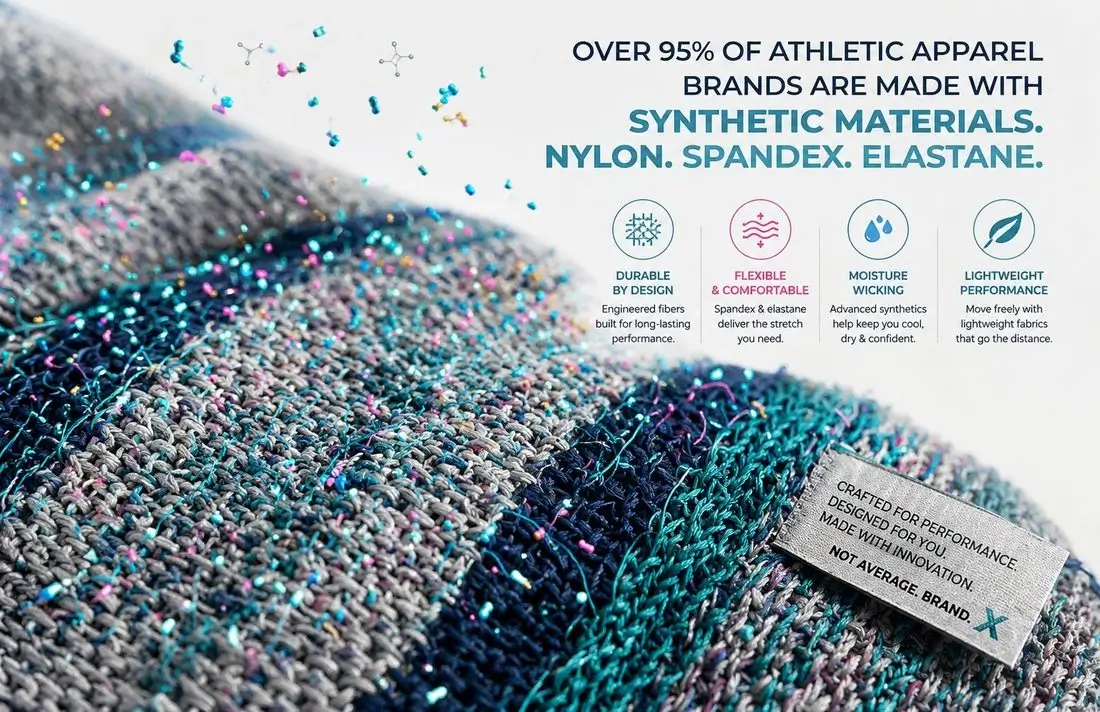
95% of athletic wear is made with synthetic materials. Nylon. Elastane. Spandex. That is plastic. Plastic that sits directly on your skin for hours at a time while you sweat, move, stretch, and train.

Most people have never stopped to think about that. And the industry has never given them a reason to.

But here is what the science is starting to tell us. When synthetic fabric heats up against your skin — and athletic wear heats up fast — it sheds microscopic plastic particles. Microplastics.

Particles so small that they pass through the skin barrier and enter the bloodstream. Researchers have now found microplastics in human blood, in lung tissue, in placental tissue, and most recently in testicular tissue.

Let that land for a moment. In testicular tissue.

The same tissue responsible for producing testosterone and sperm. The same tissue that has been sitting inside a pair of synthetic compression shorts during every workout, every practice, every game.

Here is what the data shows. Sperm counts have fallen 62% since 1973. Testosterone levels have been declining approximately 1% every year since the 1970s. These are not fringe statistics. These are published, peer-reviewed findings that researchers are actively trying to explain.

Nobody is saying synthetic underwear is the only cause. But the timeline is striking. The rise of synthetic athletic wear and the decline of male reproductive health follow the same curve.

The hard truth is that the athletic apparel industry has spent decades engineering the most synthetic, highest-performance, most plastic-dense garments possible and putting them in the most sensitive places on the human body. And nobody asked whether that was a problem.

This guide asks that question.

And Attack Briefs are the answer.

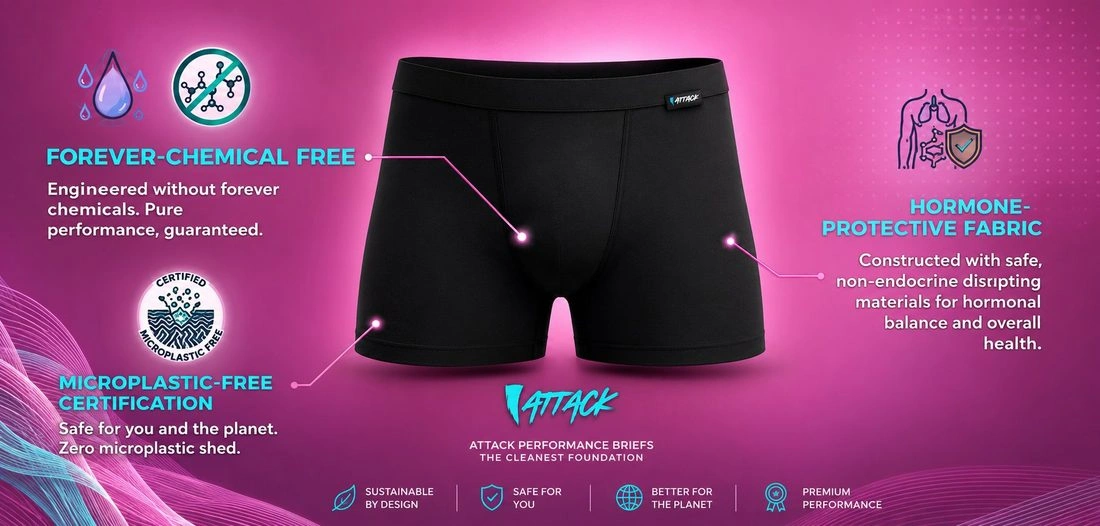
100% synthetic free. Merino wool and natural rubber. No polyester. No nylon. No spandex. No microplastics shed onto your skin while you train.

Performance that protects you. Not compromises you.

That is what this is about.

Performance Doesn't Have To Be Plastic!

What touches your skin enters your body. Synthetic athletic wear is plastic. Plastic disrupts hormones. Most parents have never been told this.

62%

Drop in sperm counts since 1973.

Source: Levine et al., Human Reproduction Update, 2022.

~1%

Annual decline in male testosterone levels since the 1970s — meaning a man in his 40s today has significantly lower testosterone than a man the same age a generation ago.

Source: Travison et al., Journal of Clinical Endocrinology and Metabolism, 2007.

100%

Of testicular tissue samples tested in a 2023 study contained microplastics — with researchers noting a potential link to declining sperm quality.

Source: Xue et al., Science of the Total Environment, 2023.

Researchers have used "flash drag illusions" to demonstrate how our brains have a natural tendency to predict the motion of moving objects.

In the video below, you can see how your vision naturally attempts to predict the movement of the dots based on the movement in the background.

Keep in mind: The dots stay in the same place the entire time.

Microplastics Damage Hormones!

Joe Rogan tells the story of a friend whose microplastic levels test off the charts. He cuts the exposure from his life, and his testosterone climbs.

02

Lesson 2

Plastic, Petrochemicals, and Your Child's Athletic Wear.

Microplastics
Endocrine Disruption
Petrochemicals
Microplastic Athletic wear Attack img

The invisible ingredient in your child's athletic wear that nobody in the industry ever told you about.

Microplastics are microscopic plastic particles — smaller than 5 millimeters — that shed from synthetic materials through heat, friction, and movement.

In the context of youth sports, every time your child wears polyester shorts, a nylon jersey, or a spandex base layer during practice or competition, friction and sweat accelerate the release of these particles directly onto their skin.

Researchers have now found microplastics in human blood, lung tissue, and testicular tissue. For youth athletes whose bodies and hormonal systems are still actively developing, this is not a distant risk. It is happening during every training session, every game, every rep.

Endocrine Disruption img

How the clothes your child trains in every day may be interfering with the hormones that define their development.

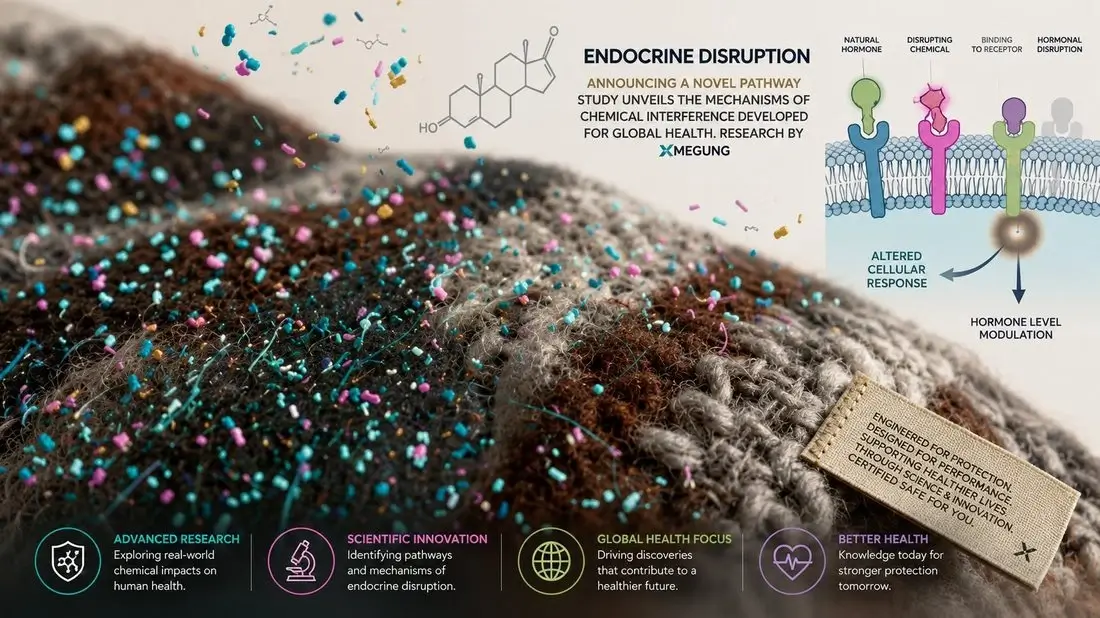
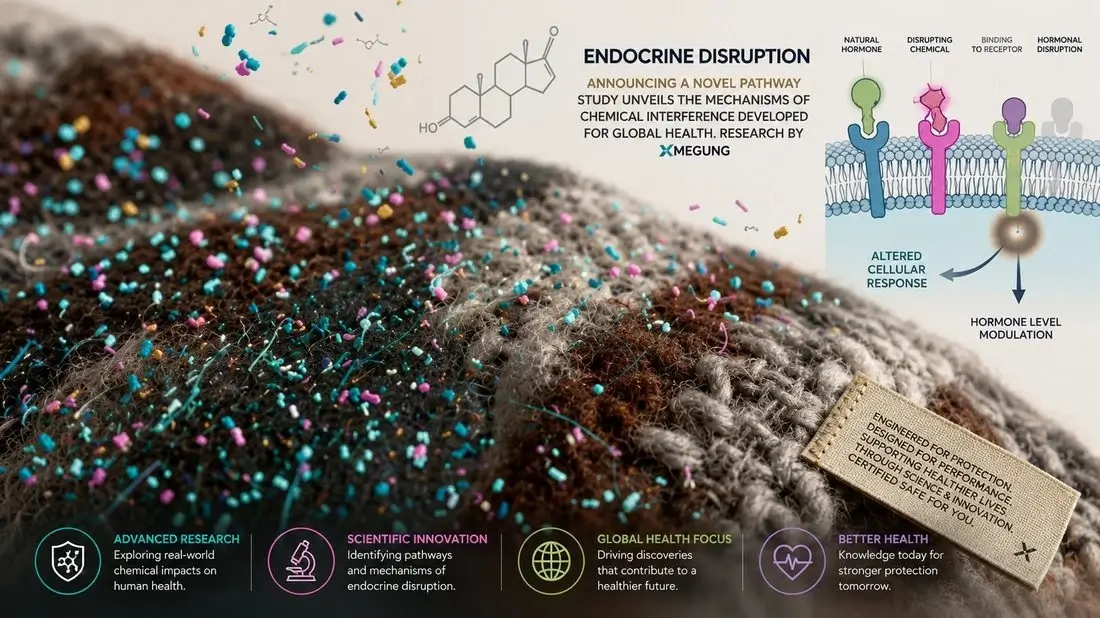
The endocrine system is the body's hormonal communication network. It regulates testosterone, estrogen, growth hormones, and reproductive development. Endocrine disruption happens when foreign chemical compounds interfere with that system — mimicking, blocking, or altering the hormones the body produces naturally.

Synthetic athletic wear contains petrochemical compounds, including phthalates and BPA derivatives that are classified as endocrine disruptors. For youth athletes in peak developmental years, consistent exposure to endocrine-disrupting materials is a direct threat to the hormonal architecture being built right now. The timing could not be worse.

Petrochemicals img

The reason 95% of athletic wear is made from plastic. Here's why that matters

Petrochemicals are chemical compounds derived from petroleum, crude oil, and natural gas. They are the raw material behind every synthetic fabric in athletic wear. Polyester is a petrochemical. Nylon is a petrochemical. Spandex and elastane are petrochemicals. When a brand says their fabric is high-performance, moisture-wicking, or four-way stretch, what they are really saying is that it is made from oil.

In the context of youth sports, this matters for one simple reason. Petrochemical compounds do not belong on the skin of a developing athlete. Many of the chemical additives used in synthetic fabric manufacturing — phthalates, bisphenols, flame retardants, and dye fixatives — are classified as endocrine disruptors. They mimic or block hormones. They interfere with the body's natural signaling system. And they are present in virtually every synthetic garment sitting in your child's gym bag right now.

The irony is that the athletic apparel industry has spent decades engineering petrochemical fabrics to feel softer, breathe better, and perform harder. The closer they get to feeling like natural fiber, the more chemistry is involved. And the more chemistry is involved, the more your child's skin is absorbing compounds that were never designed to be there.

Attack Briefs contain zero petrochemicals.

No polyester. No nylon. No spandex. No synthetic dyes. Merino wool and natural rubber. That is it.

Two materials that have been against human skin for centuries, before petrochemicals existed, and before anyone needed to worry about what their underwear was made of.

No Polyester

No Nylon

No Spandex

No Synthetic Dyes

Merino Wool

Natural Rubber

03


Lesson 3

How To Choose Athletic Wear That Protects Your Hormones

Synthetic Free
Protect Hormones
Protect Testosterone
GOTS Certified
Synthetic Free bg

We created Attack Briefs because we asked a question nobody in the athletic apparel industry was asking.

If microplastics are shedding from synthetic fabric and researchers are finding them in human blood, lung tissue, and testicular tissue, why is every athletic brief on the market still made from synthetic plastic?

The answer is not science.

The answer is convenience and cost. Synthetic fabrics are cheap. They are easy to manufacture. They stretch predictably and recover consistently.

The industry optimized for performance metrics and ignored the biological ones.

We decided that was not good enough. Not for men who train seriously. Not for athletes who optimize everything else about their health.

And especially not for youth athletes whose hormonal systems are still actively developing during the exact years they are spending the most time in synthetic athletic wear.

So we built the alternative. It took time. It took GOTS certification. It took finding a manufacturer willing to work with natural rubber waistbands instead of elastane.

It took a commitment to never compromise on the material stack, regardless of the cost premium.

Attack Briefs exist because the brief that should have existed never did. We built it.

Protect Hormones bg

Attack Briefs were engineered to eliminate every point of synthetic exposure.

95% of athletic wear is made from synthetic materials. Nylon. Elastane. Spandex. That is plastic. Plastic that sits directly on your skin for hours at a time while you sweat, move, stretch, and train.

Here is what happens at a biological level. Synthetic fabrics are petrochemical polymers, plastic chains derived from crude oil. When heat and friction are applied during training, these polymer chains shed microscopic particles called microplastics directly onto your skin.

The scrotal and genital region is one of the most permeable areas of skin on the human body, thin skin, high blood flow, dense sebaceous glands, which means absorption is faster and deeper than almost anywhere else.

Once inside the body, these petrochemical compounds behave as xenoestrogens. A xenoestrogen is a foreign chemical that mimics estrogen, binds to estrogen receptors, and suppresses testosterone production.

Phthalates, the plasticizers used in polyester and spandex manufacturing, have been detected in human blood, urine, and seminal fluid.

Studies show a direct inverse relationship between phthalate load and testosterone levels. The higher the exposure, the lower the testosterone.

Researchers have now found microplastics in human testicular tissue in 100% of samples tested. Sperm counts are down 62% since 1973. Testosterone has been declining approximately 1% every year since the 1970s.

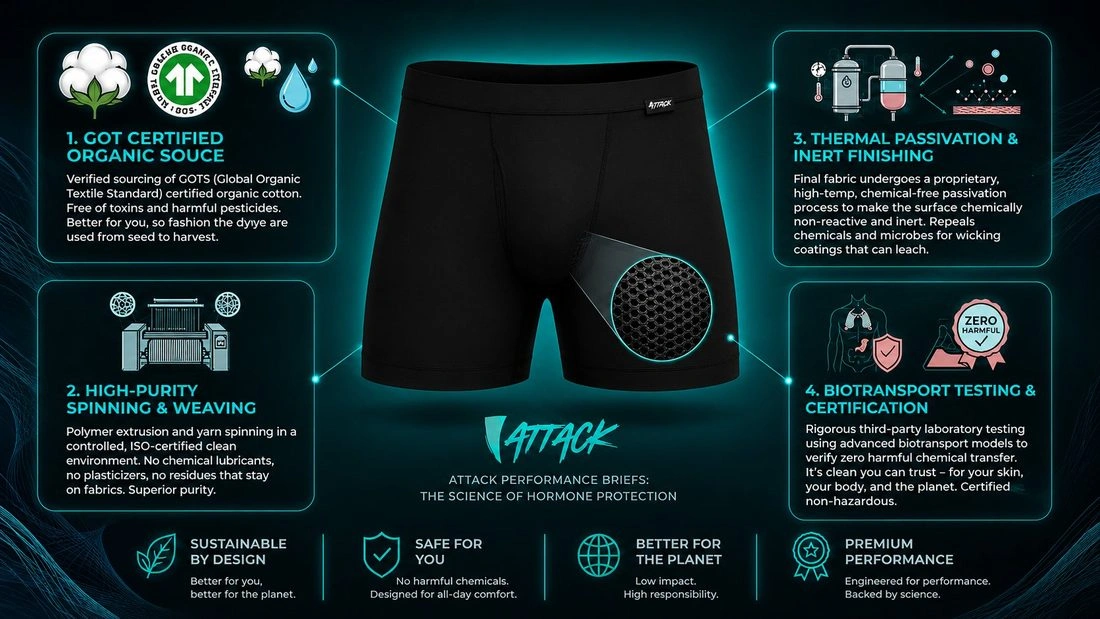
The fabric is GOTS certified merino wool, a protein based keratin fiber, the same biological material as human hair and skin. It contains zero petrochemical compounds. It does not shed plastic particles.

It carries no phthalates, no BPA derivatives, no xenoestrogen compounds of any kind.

The waistband is natural rubber, polyisoprene derived from the rubber tree. Not elastane. Not spandex. Natural rubber has been in contact with human skin for over a century and carries none of the endocrine disruption profile of synthetic elastomers.

The result is complete elimination of the three mechanisms of harm. No microplastic shedding. No xenoestrogen exposure. No petrochemical bioaccumulation against your most sensitive tissue.

No polyester. No nylon. No spandex. No synthetic dyes. Nothing that compromises your hormones.

One brief. One decision. Built to protect what matters most.

Protect Testosterone bg

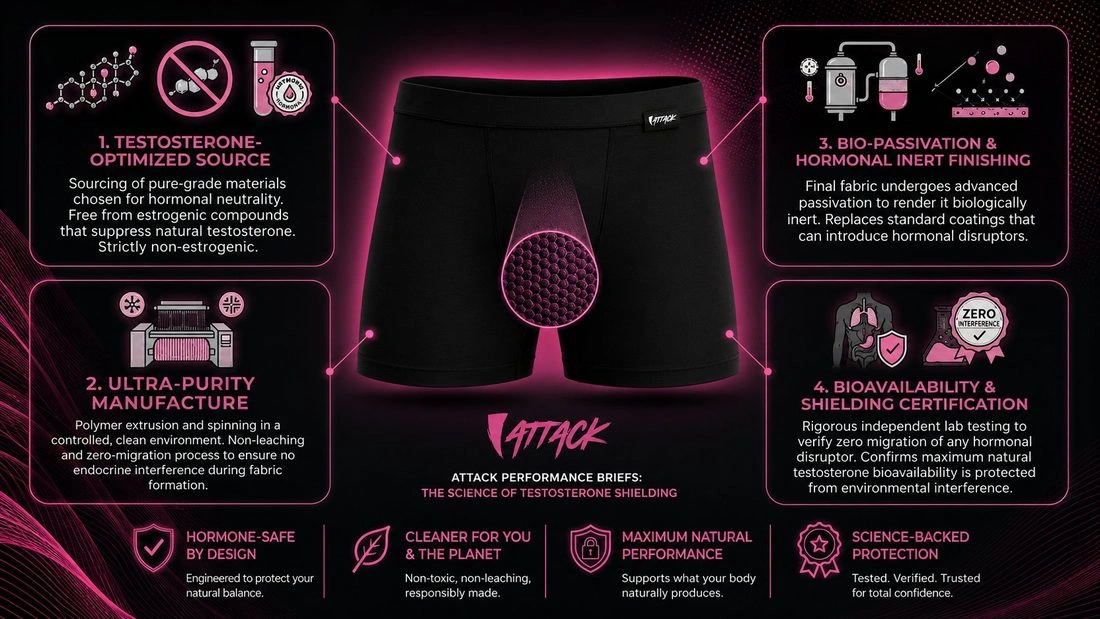
The mechanism of testosterone suppression operates at two levels. First, petrochemical compounds including phthalates, the plasticizers in polyester and spandex, behave as xenoestrogens.

They bind to estrogen receptors and trigger negative feedback on the hypothalamic-pituitary-gonadal axis — the hormonal feedback loop that drives testosterone production, suppressing it at the source. Second, phthalate metabolites directly impair Leydig cell steroidogenesis, the enzymatic process that converts cholesterol into testosterone, chemically inhibiting production at the cellular level.

Attack Briefs eliminate every point of exposure. GOTS certified merino wool is a keratin protein fiber.

Zero petrochemical compounds. Zero phthalates. Zero microplastic shedding. The natural rubber waistband contains no synthetic plasticizers. No xenoestrogens enter the system.

The HPG axis functions without interference. Leydig cells produce testosterone without chemical inhibition. Your testosterone stays yours.

GOTS Certified bg

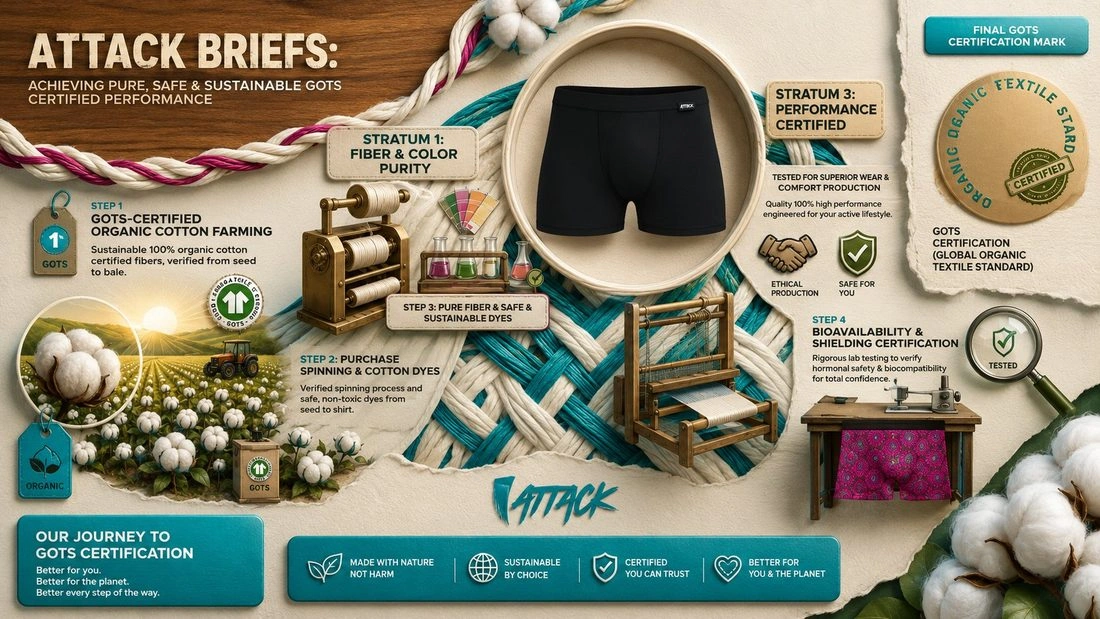
GOTS does not just certify the raw fiber. It certifies the entire supply chain from the farm to the finished garment. That means the cotton or wool must be grown organically without synthetic pesticides or fertilizers.

The spinning, dyeing, weaving, cutting, and sewing must all meet strict environmental and social standards.

No harmful chemical inputs at any stage of production. No toxic dyes. No synthetic finishing agents. No bleaching compounds that leave chemical residue in the fabric.

Every facility that touches the product, from the farm to the factory, must be independently audited and certified annually.

When Attack Briefs say 100% synthetic free and GOTS certified they are not making a marketing claim. They are presenting a verified fact confirmed by an independent certifying body that audited every step of the supply chain.

04

Lesson 4

Make The Switch!

Your child is at practice right now. In polyester shorts. A nylon jersey. A spandex base layer.

Every rep they take, every drill they run, every hour they spend training, synthetic plastic is pressed against their most sensitive skin in the most critical developmental years of their life. This is not a future concern. This is happening today.

Microplastics have been found in human testicular tissue. Sperm counts are down 62% since 1973.

Testosterone declining every year. And the athletic apparel industry has never once asked whether what they put on your child contributed to any of it. The switch takes one decision.

Attack Briefs are 100% synthetic free. GOTS certified merino wool and natural rubber. Nothing made from crude oil. Nothing that sheds plastic onto your child's skin. You made the switch to organic food. You read labels on supplements. Now read the label on what your child trains in every single day. Then make the switch.

Make The Switch

Andrew Huberman explains that microplastics now show up in virtually every human tissue tested, from blood to the testicles. The science, he says, links them to real, measurable effects on hormone health.

Performance Doesn't Have To Be Plastic!

Get 10% off at checkout when you use code: ATTKBRF10

10%

Use code at checkout

Apply ATTKBRF10 on Attack Briefs