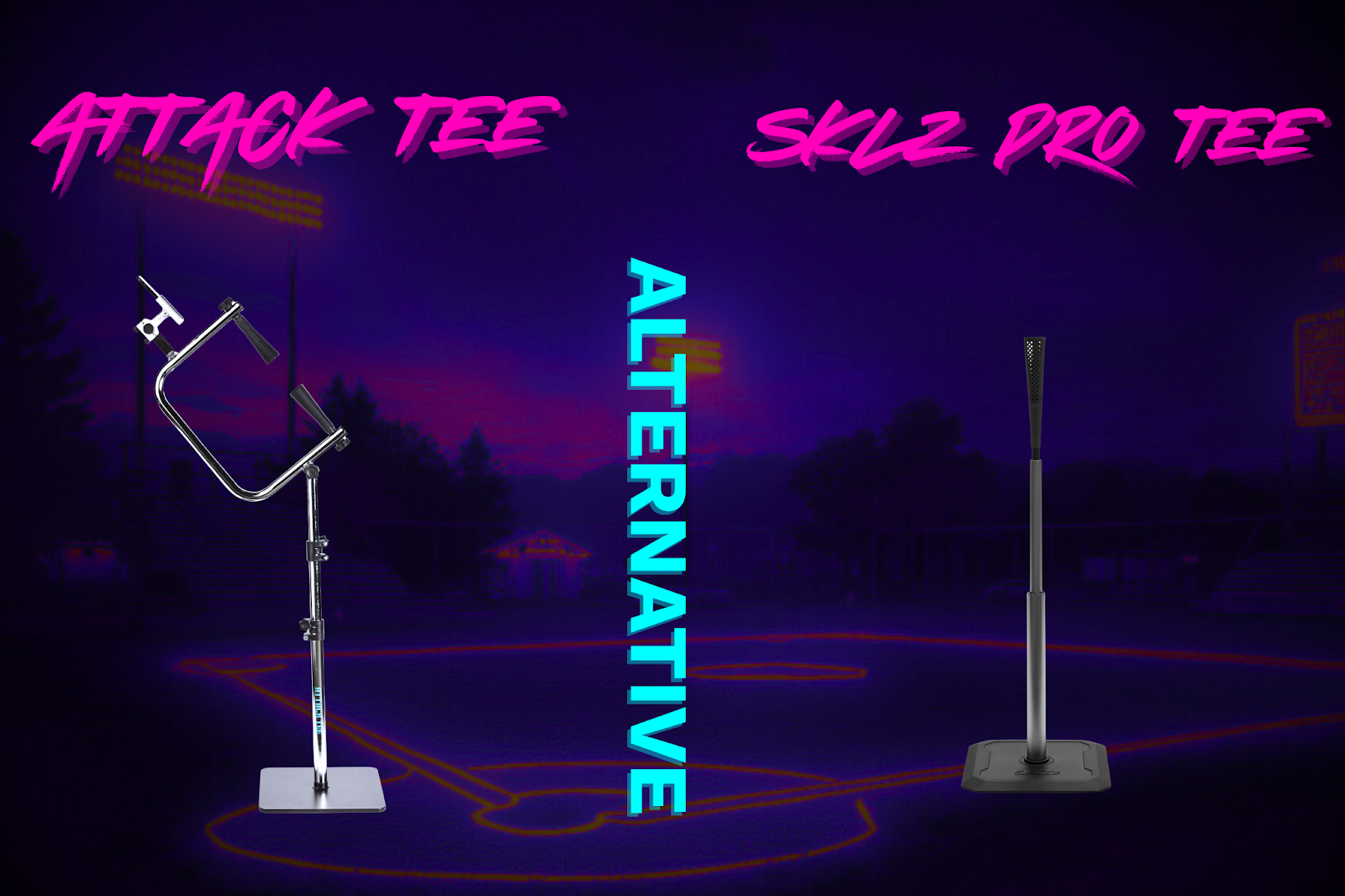
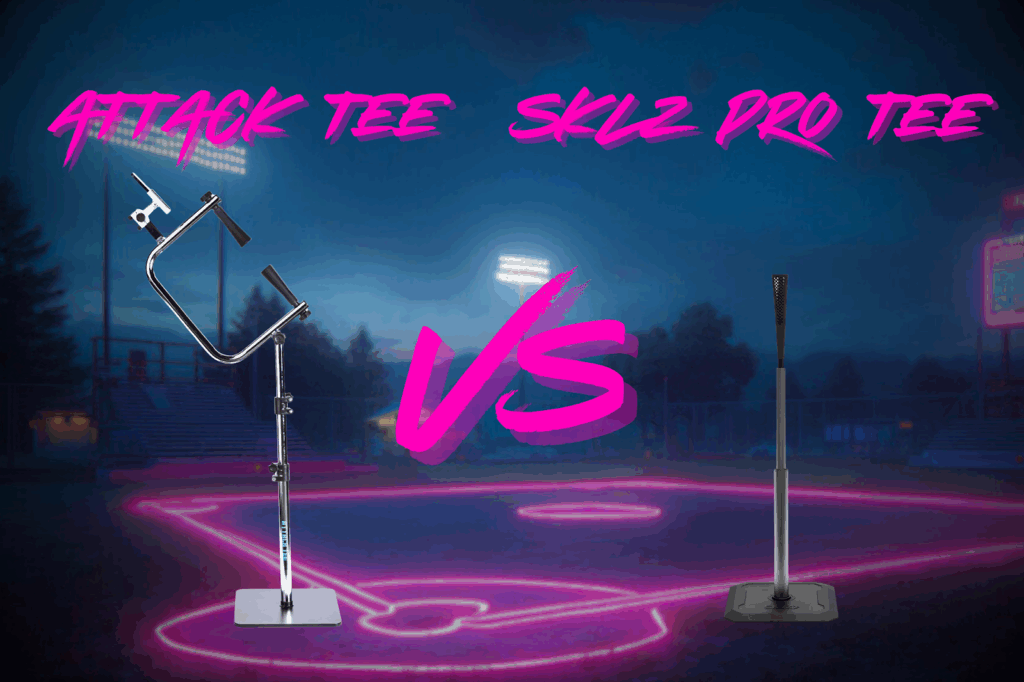
Having managed an elite training facility for 18 years while evaluating countless batting tees and witnessed thousands of developing hitters train each year, I understand how equipment decisions shape athletic trajectories. This comprehensive analysis examines whether the popular SKLZ Pro Tee justifies its reputation against the hot new kid on the block, the Attack Tee.
The Critical Equipment Decision Most Families Underestimate
The SKLZ Pro Tee enjoys widespread adoption across youth leagues and training facilities, marketed as the portable solution with professional performance. Yet beneath the marketing narrative lies a more complex reality that impacts both player development and family finances.
Through extensive facility testing and player observation, I’ve documented how assumptions about the SKLZ’s portability benefits often overshadow its performance limitations—creating hidden costs that compound across seasons. Let’s examine the facts.
Comprehensive Technical Comparison: SKLZ Pro Tee vs Attack Tee Specifications
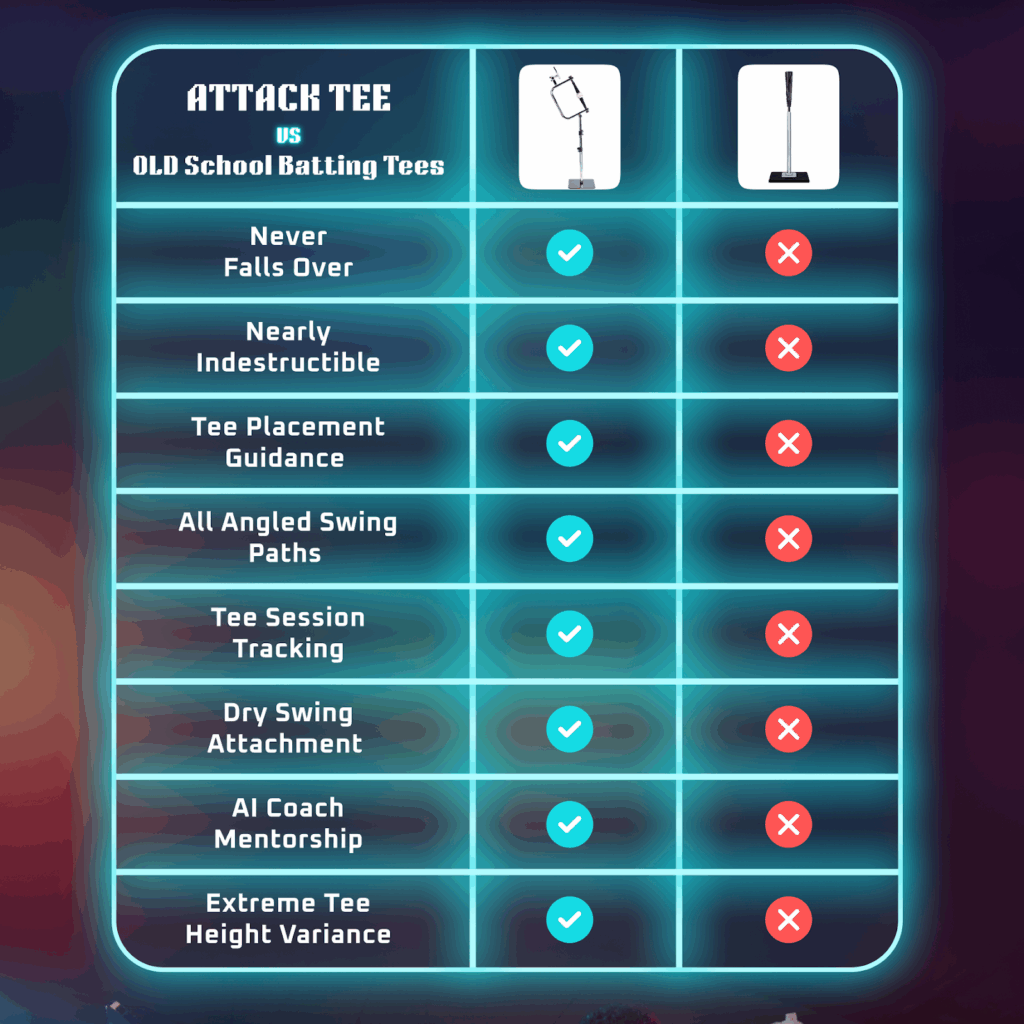
| Performance Metric | Attack Tee | SKLZ Pro Tee |
| Retail Investment | $237.97 | $97-140 |
| Complete Weight | 17.2 lbs iron base | 7-8 lbs rubber base |
| Functional Height Range | 19″-49″ | 23″-48″ (varies by model) |
| Base Configuration | Cast iron platform | Rubber weighted square |
| Swing Plane Capability | Infinite adjustment | Fixed perpendicular only |
| Digital Training Tools | iOS app w/ MLB data | None |
| Warranty Coverage | 365-day full replacement | 1-year limited |
| Replacement Top Cost | None required | $28.99 |
Performance Analysis: Where Marketing Claims Meet Training Reality
1. Foundation Stability: The Portability Paradox
SKLZ Pro Tee’s Lightweight Dilemma (7-8 lbs)
SKLZ emphasizes portability through reduced weight, but this creates immediate stability compromises:
- Base mass insufficient for power hitters ages 12+
- Snap-lock mechanism creates wobble under impact
- Regular tipping documented with aggressive swings
- Users consistently report adding external weights (dumbells, sand bags, or weight plates)
Training Reality: During team or solo practices, SKLZ Pro Tees require sandbags or weight plates stay upright—eliminating the supposed portability advantage while adding $30-50 in hidden costs.
Attack Tee’s Immovable Foundation (17.2 lbs iron)
- Iron density exceeds the average youth swing forces by 400%+
- Low-profile design prevents leverage-based tee tipping
- Zero supplemental weighting required across all ages
- Maintains position through thousands of swings
Performance Verdict: SKLZ’s portability focus sacrifices essential stability, while Attack Tee’s substantial foundation enables uninterrupted training flow.
2. Height Adjustment: The Growing Player Challenge
SKLZ Pro Tee Range Limitations (23″-48″)
The 25-inch adjustment window creates developmental gaps:
- Beginning players (ages 4-7): 23″ minimum height challenges smaller statures
- Youth progression (ages 8-11): Full 24″-36″ developmental range
- Power development (ages 12-16): Complete 32″-45″ coverage
- Elite training (ages 17+): Maximum 49″ reaches all zones
Attack Tee’s Complete Spectrum (19″-49″)
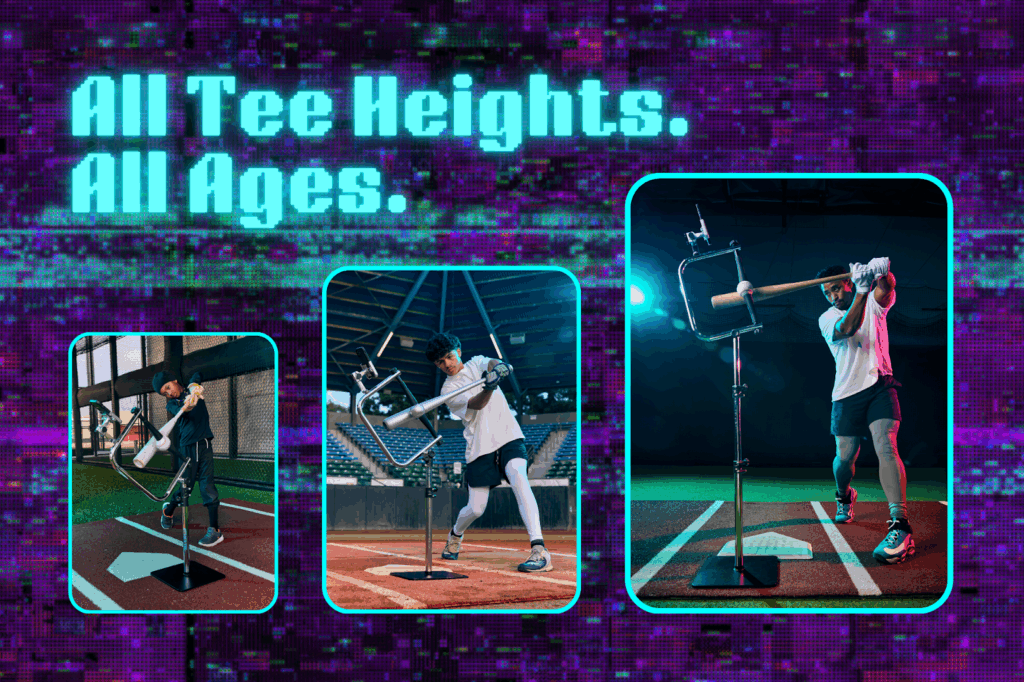
The industry-leading 30-inch range eliminates equipment turnover:
- First swings (ages 4-7): 19″ minimum accommodates even the smallest players
- Youth progression (ages 8-11): Full 24″-36″ developmental range
- Power development (ages 12-16): Complete 32″-45″ coverage
- Elite training (ages 17+): Maximum 49″ reaches all zones
Equipment Lifecycle Impact: Families using SKLZ typically purchase 2-3 different tees across youth careers, while Attack Tee users invest once.
Development Verdict: Attack Tee’s range spans entire baseball journeys, while SKLZ forces age-based replacements at least on the younger part of the height range.
3. Mechanical Training Philosophy: Static vs Dynamic Development
SKLZ Pro Tee’s Fixed-Angle Limitation
The perpendicular-only design represents 1950s training philosophy:
- Identical swing plane regardless of pitch location
- No differentiation between inside/outside zone locations
- Forces compensatory swing mechanics
- Can creates “tee swing” syndrome disconnected from live games
Attack Tee’s Angle Variability Revolution
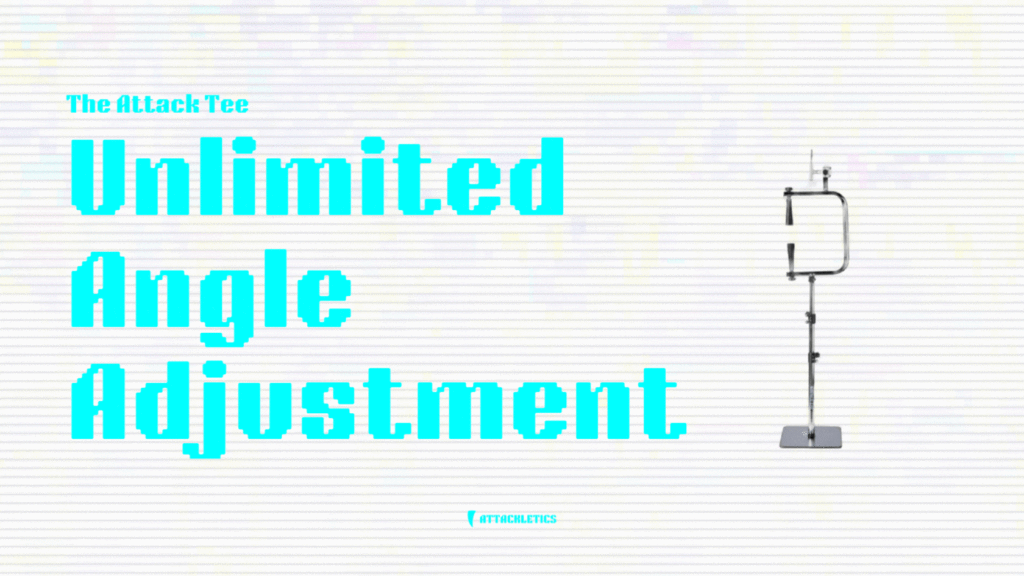
True angle adjustment capability mirrors the modern professional training evolution:
Based on 2024-2025 MLB tracking data:
- High zone contact: 6-9° optimal barrel angle
- Middle strikes: 8-11° attack trajectory
- Low pitch crushing: 13-25° launch path
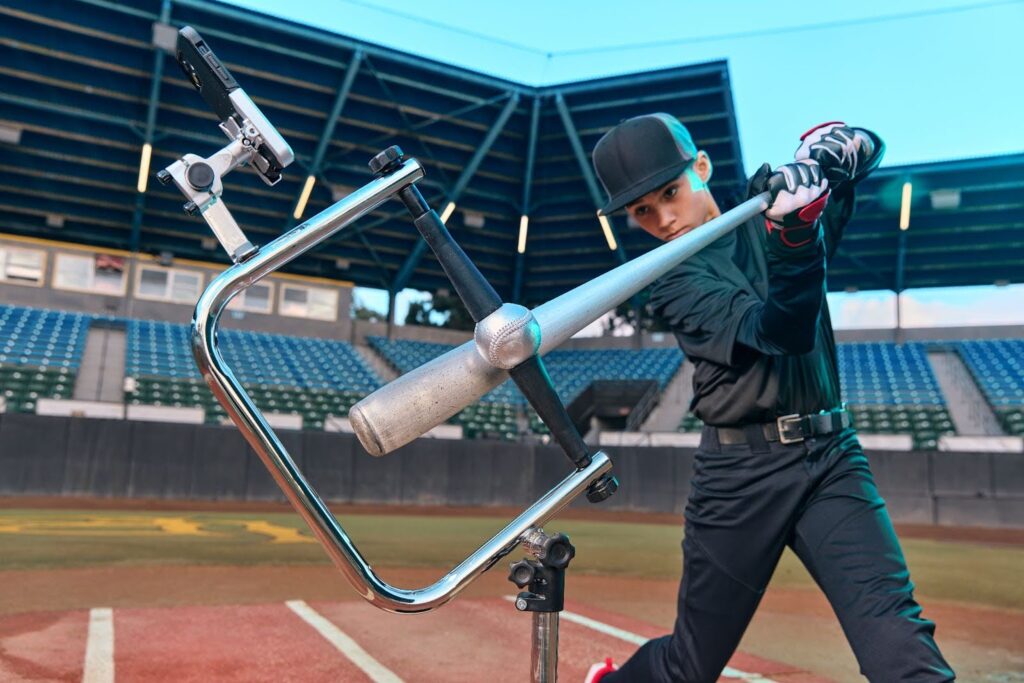
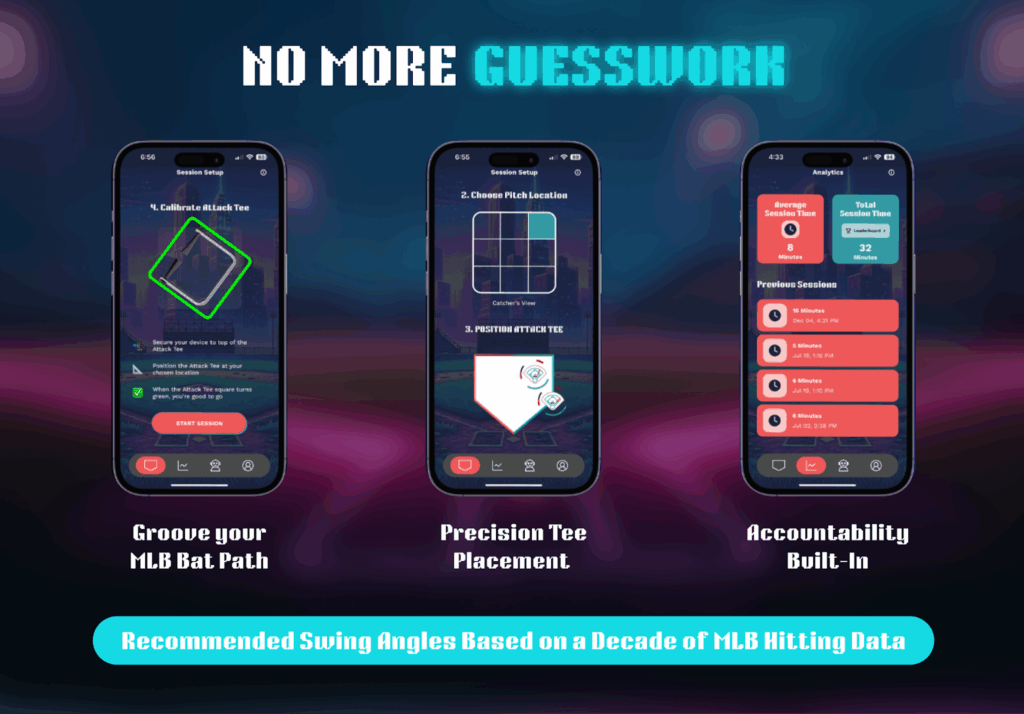
The Attack Tee’s free iOS application translates this data into youth-accessible training and guidance, teaching zone-specific bat path mechanics through equipment design itself, along with app visuals.
Mechanical Development: Players transitioning from SKLZ to Attack Tee consistently demonstrate immediate barrel control improvements—the angle variability creates motor patterns that transfer directly to games.
Training Evolution Verdict: Attack Tee develops adaptive mechanics, while SKLZ perpetuates outdated single-plane limitations.
4. Tee Top Engineering: Active Coaching Through Equipment Design
Attack Tee’s Revolutionary Ball Holder System
Through extensive R&D involving countless prototype iterations, Attack Tee engineered a ball-holding mechanism that functions as an active training partner rather than passive equipment:
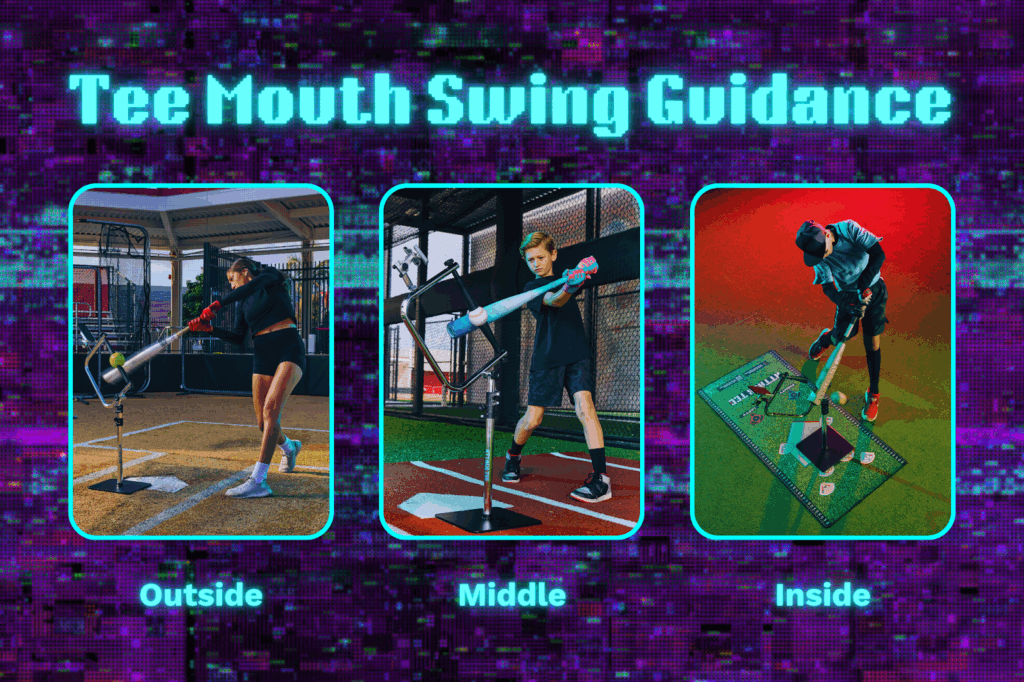
Horizontal Pivot Technology: The tee mouth rotates directionally left and right, providing both tactile and visual feedback for inside-out and pull-side training. This simple yet innovative feature naturally teaches situational hitting without verbal instruction—players instinctively adjust their approach based on the tee’s directional positioning.
Automatic Biomechanical Swing Correction: The angled plane design inherently guides players into optimal body positions. Rather than requiring conscious mechanical adjustments, hitters naturally modify their stance, hand path, and barrel trajectory to match the tee’s presentation angle—building proper muscle memory through equipment interaction alone.
Connection Development System: The unique mouth design promotes early bat-to-ball plane matching and extended contact zones—critical components of elite hitting that typically require years of professional instruction to develop.
Bonus Dry-Swing Innovation: Every Attack Tee includes a complimentary attachment transforming it into a no-ball swing trainer. This dual-purpose functionality proves invaluable for indoor winter training, apartment practice, or unsupervised team stations—essentially delivering two training tools within one investment.
SKLZ Pro Tee’s Traditional Cup Design
The SKLZ’s dual-wrapped flexible top, while marketed as providing “realistic feel,” remains fundamentally unchanged from designs pioneered decades ago:
- Static positioning offers no directional training capability
- Fixed presentation angle provides zero mechanical feedback
- Passive ball support misses developmental opportunities
- Single-function design requires separate dry-swing tools
Development Differential: Attack Tee actively teaches through design, reducing dependency on expensive instruction, while SKLZ’s passive cup requires external coaching for mechanical development—potentially adding thousands to long-term training costs.
Equipment Intelligence Verdict: Attack Tee’s holder system participates in skill development through every swing, while SKLZ maintains traditional passive ball presentation—a critical difference in modern player development.
5. Construction Quality: The Durability Reality Check
SKLZ Pro Tee’s Mixed-Material Vulnerability
Despite “pro-level” marketing claims, construction analysis reveals:
- Rubber base prone to weather degradation
- Snap-lock steel shaft develops play over time
- Dual-wrapped top requires $28.99 replacements
- Multiple mechanical failure points documented
User Feedback Reality: Reviews consistently mention “top lasted almost a whole season” and purchasing multiple replacements—revealing ongoing costs hidden in marketing materials.
Attack Tee’s Iron Engineering
- Solid cast iron eliminates failure points
- Specialty rubber top exceeds durability standards
- Zero plastic components to crack or strip
- No documented breakage across facility testing
Longevity Verdict: Attack Tee’s single-material strength delivers actual professional durability, while SKLZ’s assembly design creates replacement cycles.
6. Technology Integration: Modern vs Traditional Training
SKLZ Pro Tee’s Analog Limitations
Without technological support, players train blind:
- No guidance on proper tee positioning
- Zero feedback beyond ball flight
- Missing objective progress measurement
- Requires expensive external coaching
Attack Tee’s Digital Coaching Platform
The complimentary iOS application revolutionizes solo practice:
Instant Visual Guidance: Select batting stance, tap target zone, receive precise placement instructions—eliminating setup confusion that wastes practice time.
Professional Biomechanics Access: Each zone displays MLB-validated attack angles, democratizing elite coaching insights previously reserved for professional programs.
Progress Documentation: Automatic session tracking builds confidence through measured preparation—players enter games knowing they’ve completed proper work.
AI Coaching Option ($9.99/month): Optional mental skills and approach coaching delivers personalized instruction 24/7—solving baseball’s coaching accessibility crisis at coffee-shop pricing.
Technology Impact Verdict: Attack Tee transforms repetition into guided development, while SKLZ leaves players guessing without feedback.
True Investment Analysis: Beyond Initial Price Tags
SKLZ Pro Tee Total Ownership Cost (4 Years)
- Initial purchase: $97-140
- Replacement tops (4 @ $28.99): $116
- Stability accessories (weights/bags): $40
- Second tee for height limitations: $97-140
- Actual investment: $350-436
Attack Tee Single Purchase Economics
- One-time acquisition: $237.97
- Warranty-covered replacements: $0
- Additional accessories needed: $0
- Total investment: $237.97
Financial Reality: The “affordable” SKLZ becomes 46-83% more expensive than Attack Tee through replacement cycles and supplemental purchases.
Performance Development Costs: The Hidden Training Tax
Mechanical Compensation from SKLZ Limitations
Fixed-angle training creates ingrained flaws requiring professional correction:
- Swing plane confusion: Single angle doesn’t match varied zones
- Deceleration habits: Players slow swings preventing tipping
- Contact point errors: No guidance creates guessing patterns
- Confidence deterioration: Equipment failures blamed on technique
Remediation expenses typically include:
- Weekly hitting lessons: $50-100 per session
- Full season instruction (30 weeks): $1,500-3,000
- Multi-year correction programs: $9,000-18,000
Practice Time Lost to Equipment Issues
SKLZ Pro Tee interruptions compound significantly:
- Tipping recovery: 6-8 minutes hourly
- Snap-lock adjustments: 2-3 minutes per change
- Weight plate setup: 5 minutes per session
Season-long impact calculation:
- 13 minutes per practice × 150 annual sessions = 32.5 hours lost
- Six-year youth career: 195 hours of interrupted training
That represents losing an entire season to equipment inadequacy.
Strategic Selection Framework: Matching Equipment to Development Goals
Attack Tee Optimal Applications:
- Committed athletes: Training 3-4+ times weekly
- Long-term development: Multi-season progression planned
- Home training centers: Permanent or semi-permanent setup
- Technology adoption: Families valuing app-guided improvement
- Quality investment mindset: Understanding value beyond price
- Mechanical precision focus: Proper development prioritized
SKLZ Pro Tee Consideration Scenarios:
- Casual participation: 1-2 weekly practices maximum
- Ultra-portable needs: Constant transportation requirement
- Uncertainty about commitment: Testing baseball interest
- Absolute budget ceiling: Cannot exceed $150 initial cost
- Traditional coaching preference: No technology integration desired
Professional Assessment: The Investment That Matches Ambition
After nearly two decades evaluating training equipment while developing elite players, the SKLZ Pro Tee vs Attack Tee comparison reveals fundamental philosophical differences.
The SKLZ Pro Tee, despite widespread adoption, delivers recreational-grade performance disguised as professional equipment:
- Inadequate 7-8 pound stability requiring supplementation
- Limited height range forcing multiple purchases
- Fixed-angle design creating mechanical limitations
- Regular replacement cycles adding hidden costs
- Missing modern training technology
The Attack Tee represents training evolution through:
- Unmatched 17.2-pound never-tip stability
- Industry-leading 19″-49″ complete coverage
- Revolutionary angle adjustment matching game reality
- Documented extreme durability eliminating replacements
- Professional coaching through app integration
For competitive players, the decision transcends equipment—it’s choosing between maintaining limitations or maximizing potential. The SKLZ offers familiar adequacy while the Attack Tee delivers transformational capability.
Ready to upgrade from constant replacements to permanent performance? [Secure your Attack Tee here] and experience why serious players abandon portability promises for professional results.
Essential Questions Answered
Q: Why does SKLZ market “professional grade” if stability issues exist? Marketing terminology often reflects aspiration rather than performance. The 7-8 pound base provides improvement over discount alternatives but falls short of actual professional standards when tested under competitive training loads.
Q: How often do SKLZ Pro Tee tops actually need replacement? Based on facility usage and user reviews, tops typically last 3-6 months under regular team use. At $28.99 per replacement, this creates significant ongoing expenses not disclosed in initial marketing.
Q: Can the snap-lock mechanism handle aggressive hitting long-term? Multiple users report the snap-lock developing play and instability within months. The mechanism that enables portability becomes a weakness under repetitive impact forces.
Q: Does the height difference (SKLZ 48″ vs Attack 49″) really matter? For players 14+, absolutely. High school and college hitters regularly face elevated fastballs requiring maximum height training. That single inch often determines whether additional platforms are needed.
Q: Is Attack Tee’s technology useful if we have a hitting coach? The app enhances any coaching program by providing consistent reinforcement between lessons. Coaches report students using Attack Tees progress faster due to guided solo practice quality.
Q: Why choose Attack Tee over SKLZ if portability matters? Consider actual use patterns—most “portable” tees end up in fixed locations with added weights. Attack Tee’s superior performance justifies slightly reduced portability for serious training environments.
Q: How significant is the angle adjustment feature for youth players? Game-changing. Young players developing with variable angles build adaptive mechanics from the start, avoiding the remedial instruction often required after fixed-angle training.
Q: Does SKLZ offer any advantages over Attack Tee? Initial price point and weight for truly portable needs represent SKLZ’s primary benefits. For casual players prioritizing transportation over performance, SKLZ fulfills basic requirements.